Display Garden at Giving Tree

Display Garden at Giving Tree

Sunday, February 3, 2013

The American Robin-Migrating into Spring

The American Robin

         Migrating into Spring


Maybe it's just me, but it seems our Robin showing up in our area comes earlier each year. I know our climate has shifted as we are now zone 7b and no longer 7a, and Virginia Beach is now zone 8. We are not much different from central Georgia now. 
All I know at least 2 weeks ago before our first snow I started seeing the male Robins migrating into the Richmond and surrounding areas on my travels. It hardly seems worth their trouble to leave the area any more, and some continue to live here year round. I thought it would be interesting to go online and see other sitings and my gosh they were in Wisconsin in early January too. I'm sure we have a higher count giving the weather differences.
 

Robins are a migratory species, but their migration is far more complicated than simply a shift southward. There seems to be a great deal of individual variation in where they spend the winter, though males are far more likely to remain in the north than females. This is due to our  spring, when the male’s main job is to find and defend a territory. The females’ main job is to create and lay the eggs. This requires a lot of good nutrition and food energy, so females go where they are sure of good food supplies in winter. Yes, they have to use up food energy to migrate north. But migrating and laying eggs are easier for well-nourished birds.


Robins and the Seasons
The Annual Cycle of the American Robin
Robins in winter drinking water at a birdbath. social robins in winter Flock of winter robins in a tree
Image: Robin GreenJanuary Image: B. GrossFebruary Image: Diane SicklesMarch
Robin carrying dead grasses for building her nest Nesting and egg in robin nest Hungry robin nestlings
Image: Wayne KrydubaApril
Image: Dorothy EdgingtonMay Image: Vickie KingJune
Robin dad feeds fledgling juvenile robins find cherries on the ground juvenile robin eats bluebarry
Image: Randy IndishJuly
Image: Laura EricksonAugust Image: Laura EricksonSeptember
Robin feeding on berries Robin fluffed up against the cold social robins in winter
Image: Don SeversonOctober
Image:Anne CookNovember Image:William HieberDecember


Food is very important for the Robins as they begin to move back into our area. During the late fall into winter they switch their diet from worms to fruits and berries. Offering a Robin food is not the easy bird feeder route, they simply are not attracted to seeds, even with fruit mixed in. Here are a few ways to offer up a meal:
  • One of the best kinds of food for wintering robins—and the easiest for them to discover—is meal worms. You can put out a dozen meal worms on a sunny day when the temperature is above freezing, and nearby robins will often notice their wiggly movements and investigate. Once robins discover the meal worms, they'll come back even when the temperature is below freezing and the meal worms are stiff.
  • Then try offering fruit in the same spot, the robins are more likely to notice it. Some favorite robin foods are blueberries, raspberries, and strawberries. You might as well buy bags of frozen fruit for them, since it will freeze outside anyway!


  • Duncraft.com offers a neat blend of both fruit and meal worms and did I mention this is also great for bluebirds!
Water is also important for the flocks as they travel, Drinking fresh water is important for robins all year round. Flying is thirst-making exercise! Robins travel in large flocks during winter because it's helpful to have many eyes searching for food and water. So your more likely to see these birds in yards or parks that have streams, ponds or heated birdbaths that can supply a fresh water supply.

I know I could keep on for several more pages on Robin factoids, but for me the Robin is a breath of spring soon to be coming. I love to watch their playful nature, listen to the  males chatter out in the garden as they stake out their territories.
 
So watch for the American Robin and think Spring!
 

For more robin info, check out-Keeping Up with the American Robin 


Tuesday, January 15, 2013

Clematis 'Tie Dye


Clematis 'Tie Dye'

Common Name: “Clematis”-Flower color may vary due to environment

Clematis 'Tie Dye' is a new breakthrough in clematis coloring! I purchased this about 4 years ago from a great online site that is a candy land for plant geeks like me called Garden Crossing . When I saw the color, well I had to have one, and I must say the first year it was a dud, grew just a little, crossed it's arms, and just did not want to settle into our garden.  But the following year arrived with a grand attitude.  I planted it close to the deck, the roots remain cool but the vine can bask in the sun. So not only did I train this beauty on my deck but also on our bright lemon variegated hinoki cypress. What a statement it makes. I counted close to 50 blooms this year (4) and it stays in flower a good month or more starting in late June into July.  'Tie Dye' is very unusual and appropriately named! This is a one-of-a-kind, must have for the Four Season Garden.
 
Planting- Clematis can live up to 50 years or more, pretty amazing. Take time to plant each one carefully. Water the pot well before planting. This is an important step for any planting. Once you have selected a location, dig a hole at least twice as big as the pot and twice as deep. In areas with poor drainage, Mix some of the soil from the hole with a good topsoil and compost , a good organic soil will help new roots to grow faster and healthier.

The exact proportions will vary by your soil conditions. Back fill some of the hole with this mix. Ease out the vine from its pot by first pushing up on the bottom of the pot .  Never pull on the vine or its training stake to remove it. If it doesn't slide out easily, you may roll it gently one half turn on the ground while pushing down (be gentle) to loosen the sides of the soil from the pot.  Clematis roots naturally run deep, so you will notice that most of the roots are in the lower half of the pot.

The Simple Facts
  • Late, Large Flowered Hybrid
  • Full Sun, Partial Shade
  • Zones 4-11
  • Grows 10 to 12 feet
  • Pruning: type 3
  • Water regularly throughout the first growing season
 Group 3 Clematis form flowers on new growth each year, so for the best display and neatest look they should be pruned back hard each spring to about two feet off the ground or even less if desired. Remove dead or damaged branches any time.

So get your grove on, and put Clematis 'Tie Dye' on your "Must Have" list. 


Monday, January 7, 2013

Calendar of Events -2013

            Giving Tree -Open House and Rare Plant Sale


Date Pending: May 10-11 (Fri &Sat) - 9am to 2pm

Beth and Scott Burrell open up their private 2 acre garden to the public and host an exciting rare plant sale with selections from their Giving Tree gardens. Hanover Master Gardeners partner during this event to assist visitors throughout the property.


Tuesday Night Volunteers 2013


March 19th - October 21th

Join Beth & Scott  in the Giving Tree Gardens and get hands-on experience dealing with all kinds of perennials, vines, shrubs, trees, ground covers, vegetables, etc. The Burrells' plants are collected from all over the world, and there is always something new growing in the garden to enjoy. We also take pleasure sharing our plant divisions, so you, too, can have a part of Giving Tree growing in your own garden paradise.


Organic Vegetable Gardening

Design & Construction of Your Vegetable Garden
Wednesday, March 6, 5:30 - 8:30pm

Planning Your Vegetable Garden
Wednesday, March 13, 5:30 - 8:30pm


FEBRUARY/MARCH

Plants and Strategies for Deer Resistant Gardens
Tuesday, February 19, 9 am - 12 pm

Garden Installation and Maintenance
Thursdays, February 21, 28, March 7, 14, 9 - 11 am

The Beginner's Perennial Garden
Tuesday, March 5, 8:30 am - 12:30 pm

APRIL

Annuals and Perennials for Richmond Gardens
4 Thursdays, April 4, 11, 28, 25, 4 - 6 pm

MAY

Miniature/Fairy Garden Workshop
Thursday, May 9, 4-7pm

Beginning Container Gardening
4 Thursdays, May 16, 23, 30, June 6, 4-6pm

            
                             Lectures

Hanover Master Gardeners
Combining Color, Texture, and Form for a Beautiful Four-Season Landscape
February 11th- 6:30pm to 9:30pm

Tuesday, January 1, 2013

Happy New Year!

Welcoming in the New Year is always an exciting time for me. If your a plant geek like me or just have a hankering for gardening you can relate.  The new year for me means sitting on the floor of my office going through all the new plant and seed catalogs that have started arriving and putting together my wish list "which I always have to condense to a much smaller list later - or I would be in "plant debt".

My goal in starting this blog is to try on a weekly basis to highlight a new and upcoming plant or plant I am very fond of due to its performance in our garden. With the best intentions I hope to hold your interest with updates on "In the Garden @ Giving Tree", upcoming classes, workshops, and our Annual Garden Open House & Plant Sale.

I am also fond of sharing those little embellishments that make a garden exciting, along with fun "How To" and "DIY" projects that we all enjoy.

So instead of sending out a newsletter, I am in hopes this blog will better serve as a way to reach out to each of you , to weave us together in our shared love of gardening!


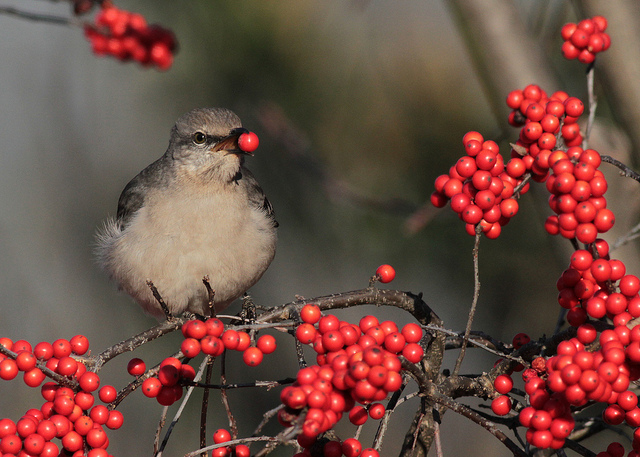
This is a nice cultivar of our native Winterberry Holly, producing a higher and larger berry count. There are a number of selections of deciduous holly that provide beautiful late fall into winter interest, and supply our winter birds with a food source.  This group of hollies also need a male counterpart for the female to produce a good berry show, so it is best to acquire your hollies at a nursery where both female and male cultivars are labeled. No surprise - you just need one male in the garden to keep all the females happy. I have mine planted off to the side, as the male does not berry, and the females planted to seek the center of the fashion runway for their dazzling focal interest.

Berry Nice® Winterberry Holly

Ilex verticillata 'Spriber'


Key feature: Showy Fruit for Late Fall/Winter Interest
Plant type: Shrub
Garden styles: Very Versatile
Deciduous/evergreen:Deciduous
Cold hardiness zones: 3 - 9
Light needs: Partial to full sun
Water Needs:Does well in both average to damp areas.
Average landscape size: Reaches six to eight feet tall and three to five wide.
Growth habit: Columnar
Special features: Attracts Birds, Improved Pest and Disease Resistance, North American Native
Landscape uses: Woodland Garden, Focal Point, Winter Interest, I love at Christmas cutting to put in arrangements.
Flowers: Inconspicuous
Foliage color: Dark Green